

Return order status when webhook received
Answer an HTTP request with the payment and fulfillment status of an order. A chatbot, help desk or customer portal sends an order number and gets the status back in the same response.
One trigger from Workflow Webhooks plus its Return Webhook Response action, no other app needed.
What it needs
A webhook in Workflow Webhooks with Synchronous response turned on, see Synchronous response, and this payload mapping. See Payload mapping and Flow variables.
| Field | What to map to it |
|---|---|
fieldOne |
The order number, for example #1001 |
A call to the webhook then looks like this:
bash
curl -X POST https://<your webhook URL> \
  -H "Content-Type: application/json" \
  -d '{"orderNumber": "#1001"}'

# Response:
# {"orders": [{"name": "#1001", "financialStatus": "PAID", "fulfillmentStatus": "UNFULFILLED"}]}Get the workflow
- Download the
.flowfile attached at the bottom of this page. - In your Shopify admin open Flow, click Import and choose the file.
- Check the steps, then click Turn on workflow.
The file is an export from Shopify Flow itself. Do not edit it by hand; change the workflow in Flow after importing it.
How it works
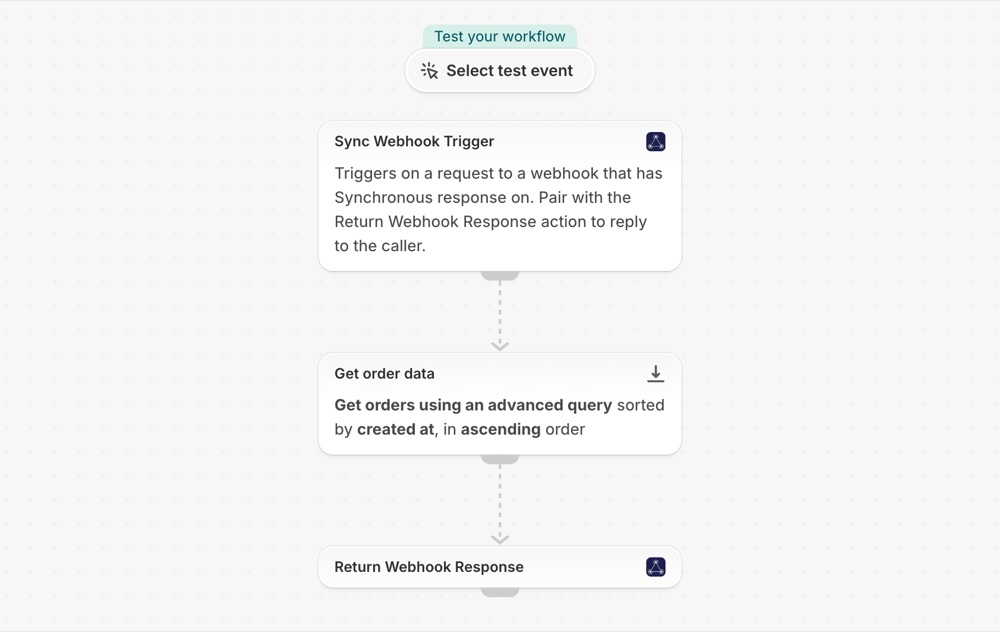
- Sync Webhook Trigger starts the workflow while the caller waits for an answer, and hands it
invocationIdand the mapped fields. - Get order data looks up the order with the query
name:{{fieldOne}}and keeps at most one result. - Return Webhook Response sends
{"orders": [...]}back to the caller, with the order's name, financial status and fulfillment status. The list is empty when no order matches.
Make it yours
- Add more order fields to the response body, for example
{{order.totalPriceSet.shopMoney.amount}}.
Next steps
- Create your first webhook - create the webhook this workflow listens to.
- Workflow templates - all templates.
- History and troubleshooting - check that the webhook reached Flow.